Model Context Protocol Fundamentals
Learn the core MCP concepts, architecture, transports, and FastMCP development workflow.
Why take this course?
Unlock the future of AI integration with the Model Context Protocol. This course is your gateway to understanding how to connect LLMs to any data source efficiently. Whether you are building smart assistants or complex AI agents, mastering MCP will give you the edge in creating scalable and interoperable AI solutions. Say goodbye to custom integrations and hello to a standardized, powerful ecosystem.
Prerequisites
This course builds on concepts from the following courses. It is recommended to complete them first:
Course Modules
Learning Goals
- Understand why MCP was created
- Identify the problems with current LLM integrations
- Learn the core philosophy of "Model Context Protocol"
Concept Card Preview
Visuals, diagrams, and micro-interactions you'll see in this module.
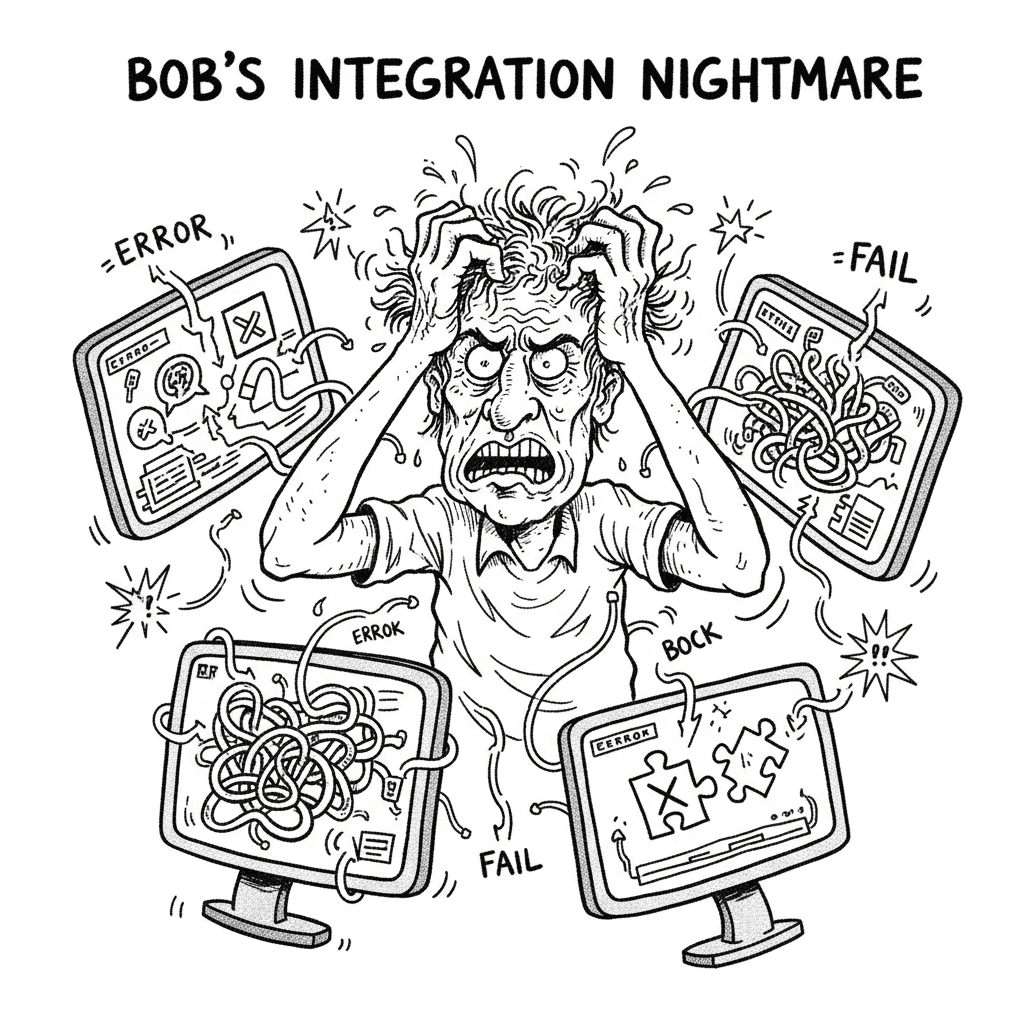
Bob's Integration Nightmare
Meet Bob — a senior developer at a fast-growing startup. His CEO just asked him to integrate their chatbot with Salesfor…
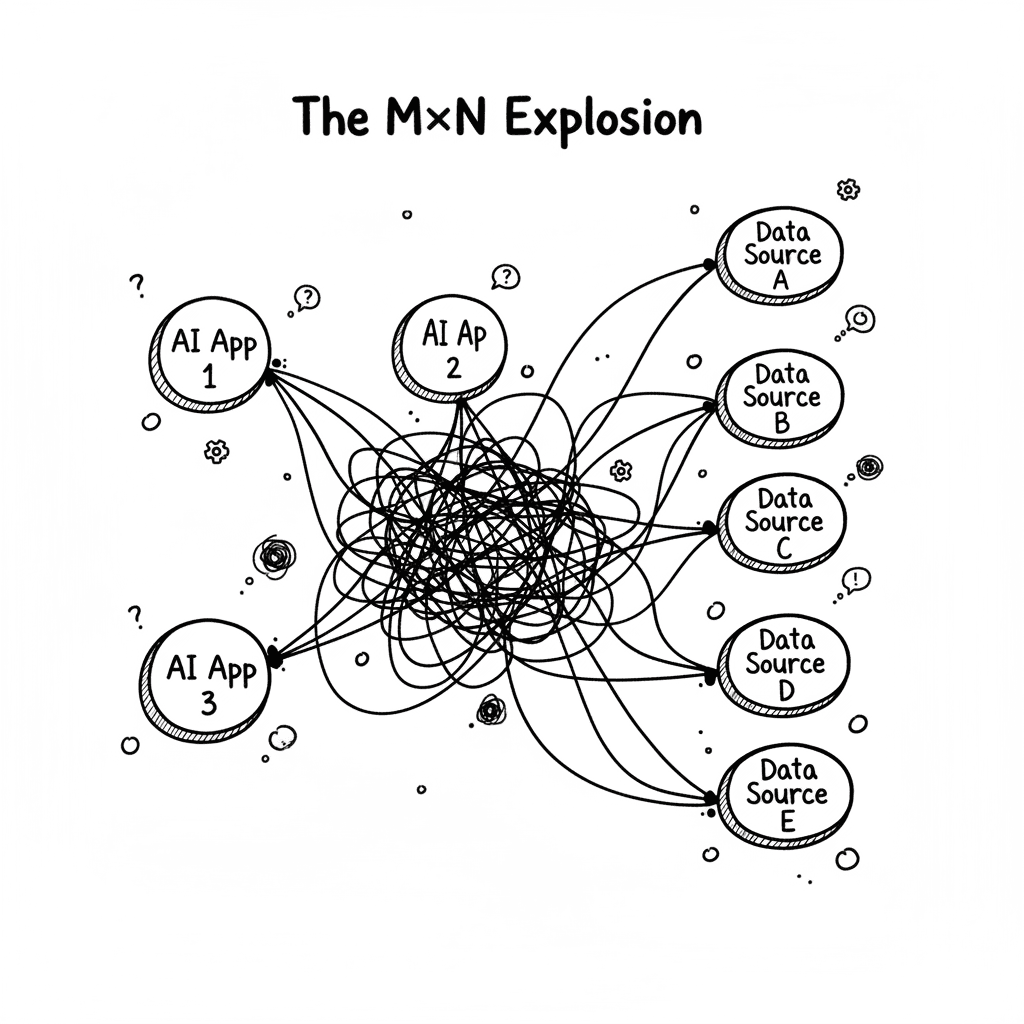
The M×N Explosion
Bob does the math — and it's depressing.
His company has 3 AI applications and needs to connect to 5 data sources. That…
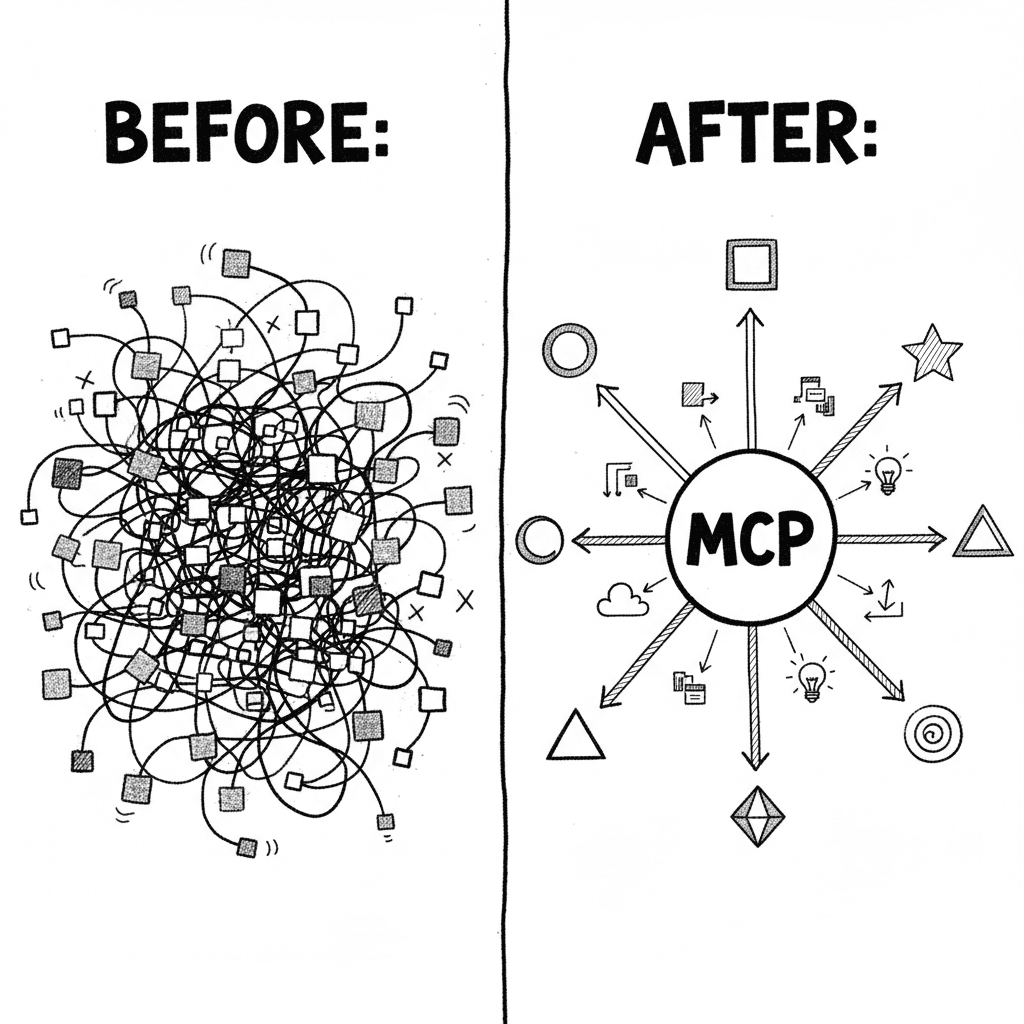
Enter MCP: The Universal Connector
Then Bob discovers the Model Context Protocol — MCP.
MCP is like USB-C for AI. Just as USB-C lets you plug any…
Learning Goals
- Identify the key participants in the MCP architecture: Host, Client, and Server.
- Distinguish between the Data Layer and the Transport Layer in the MCP stack.
- Define the three core server primitives: Tools, Resources, and Prompts.
- Understand the client-server interaction flow, including initialization, discovery, execution, and notifications.
Concept Card Preview
Visuals, diagrams, and micro-interactions you'll see in this module.
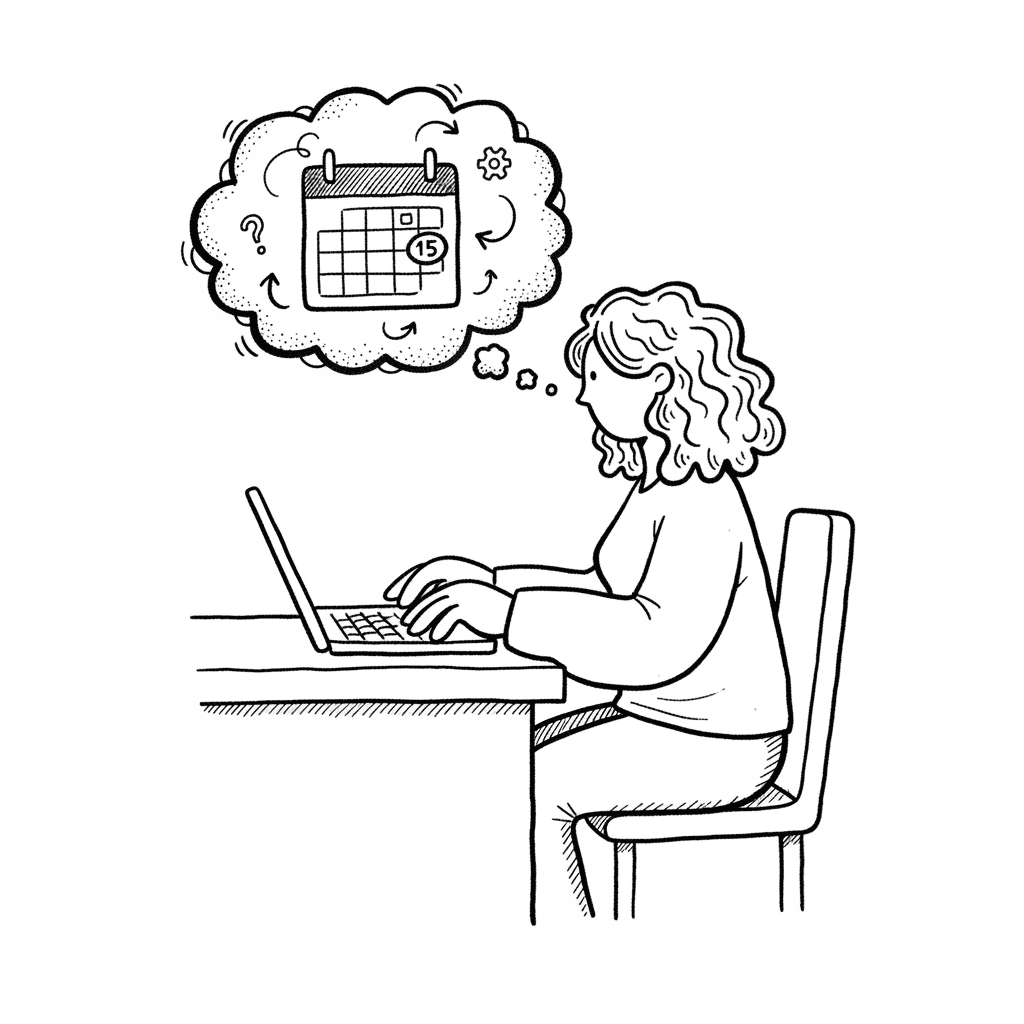
How Does MCP Actually Work?
When Sarah asks Claude Desktop for her schedule, the app doesn't access Google Calendar directly. Instead, MCP orchestra…
Following a Request From Start to Finish
Sarah types: "Do I have any meetings today?" Here's the journey:
Step 1: The MCP Host (Claude Desktop) receives…
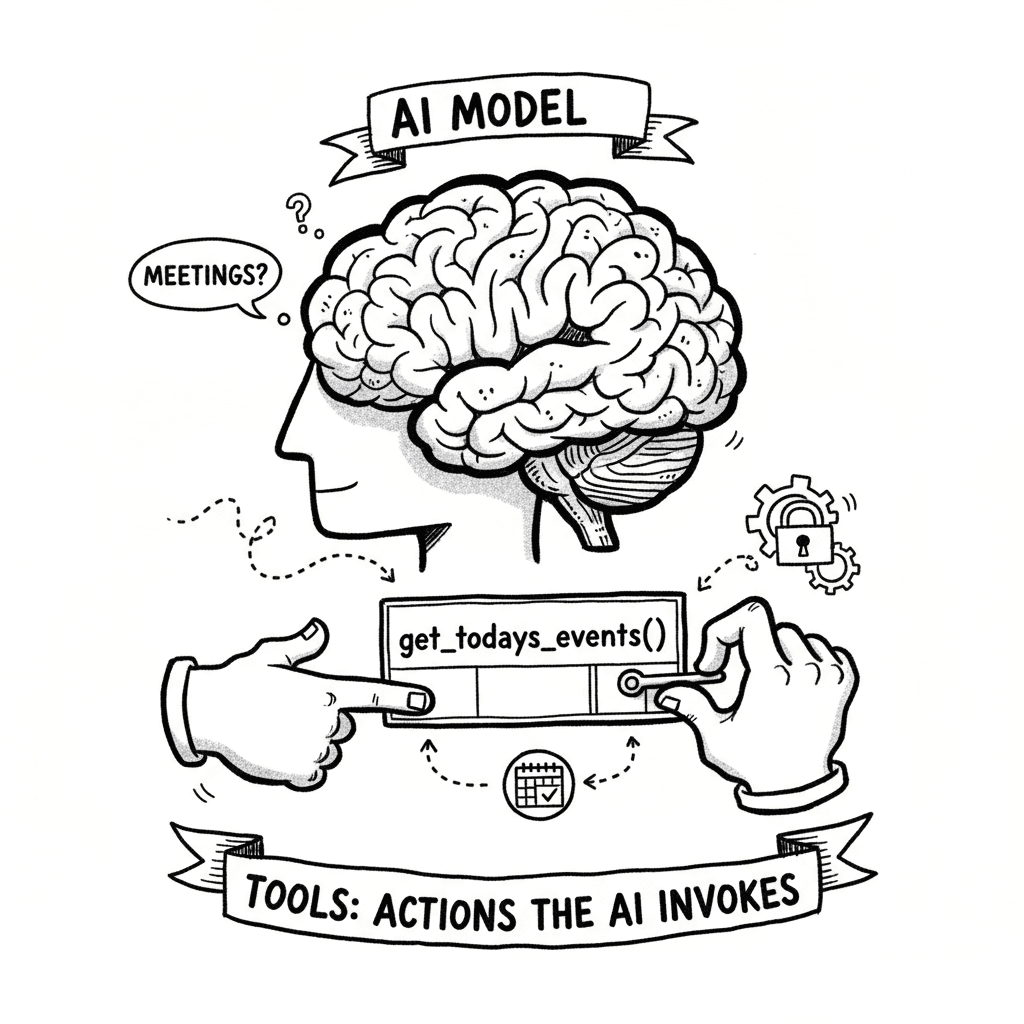
Tools: Actions the AI Invokes
Now we understand the architecture. But what can servers actually share? Let's start with the most powerful primitive: *…
Pick the right transport (stdio vs Streamable HTTP) while keeping the JSON-RPC data layer unchanged.
Learning Goals
- Explain how the transport layer carries JSON-RPC without changing the data layer
- Choose between stdio and Streamable HTTP based on environment and requirements
- Describe connection setup and failure modes for each transport
- Map a host’s multi-server connections to different transports
Concept Card Preview
Visuals, diagrams, and micro-interactions you'll see in this module.
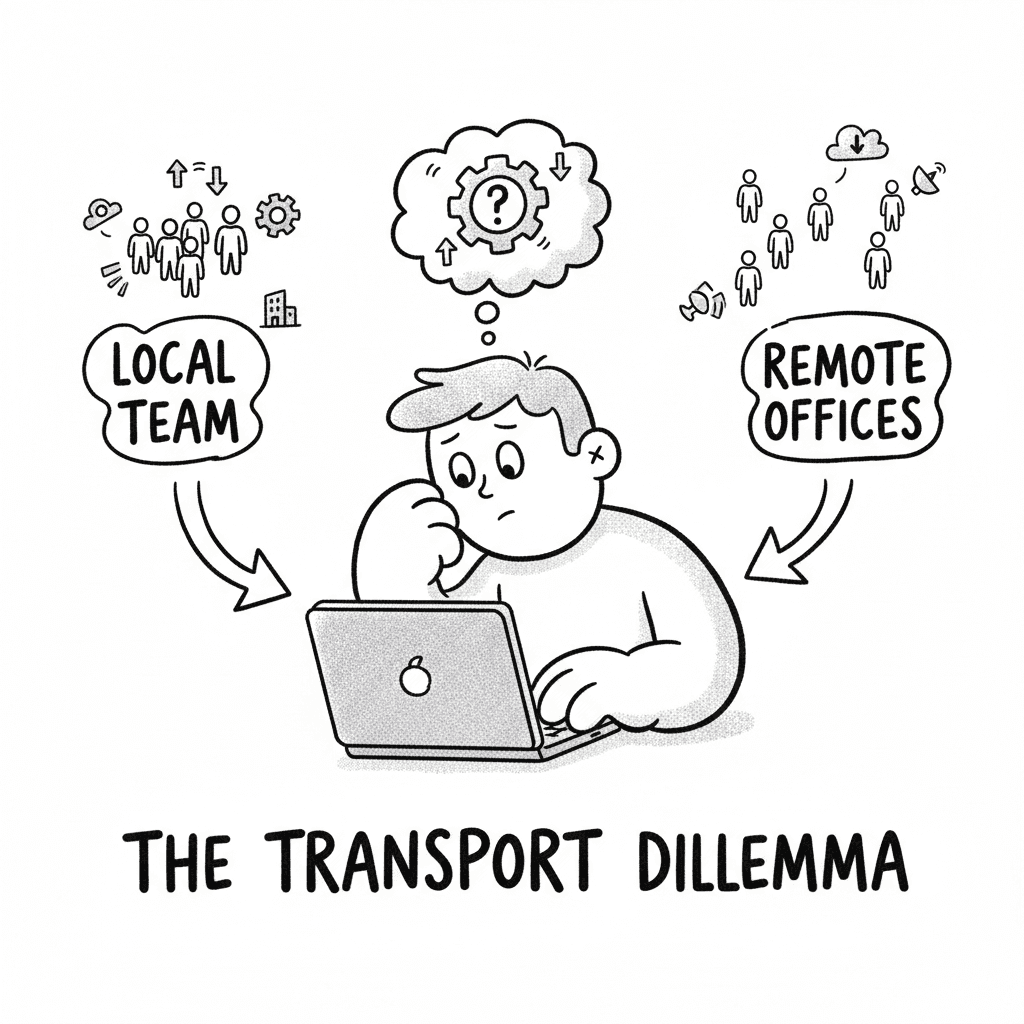
Why Transport Matters
Picture a tiny MCP server that tidies your project files. On your laptop it feels instant. Then a teammate asks to try i…
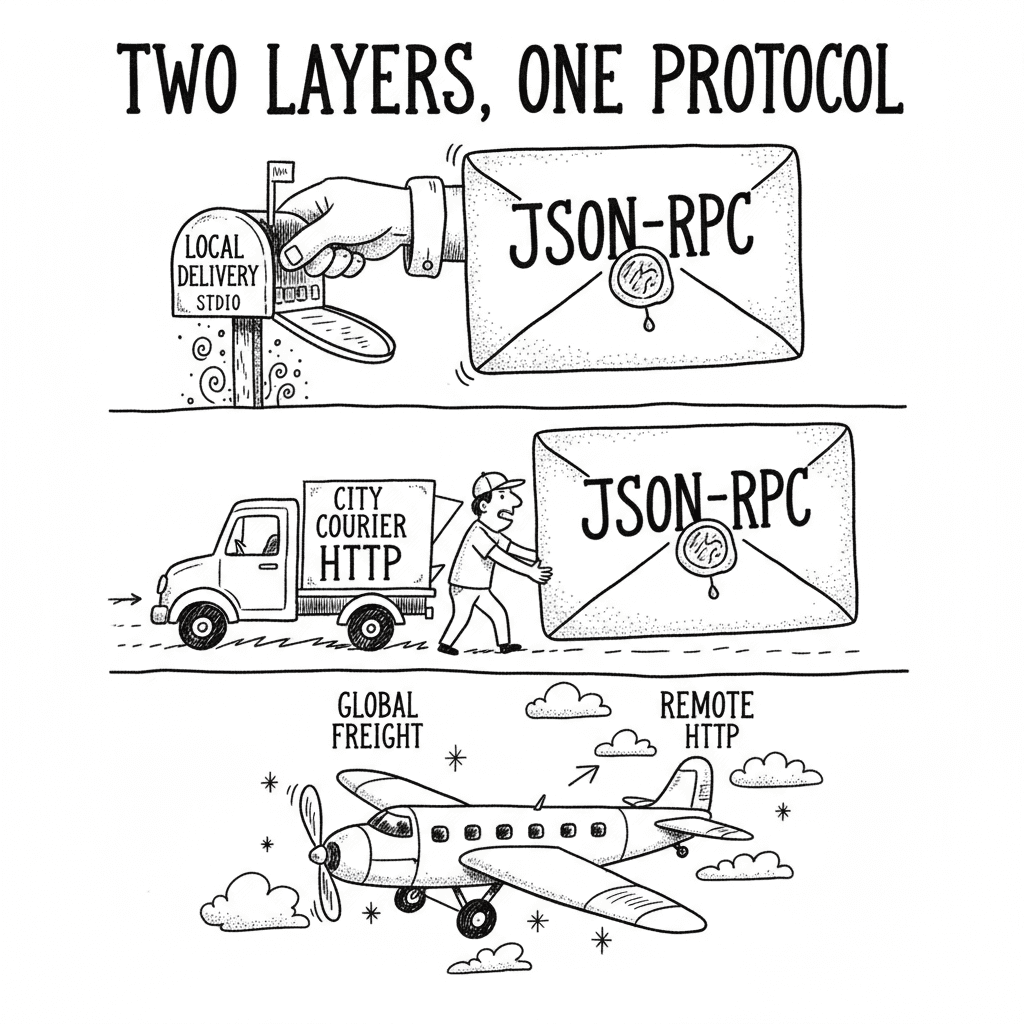
Two Ways to Carry JSON-RPC
Think of each JSON-RPC message as a sealed envelope. MCP gives you two vehicles to move that envelope:
**Stdio (local p…
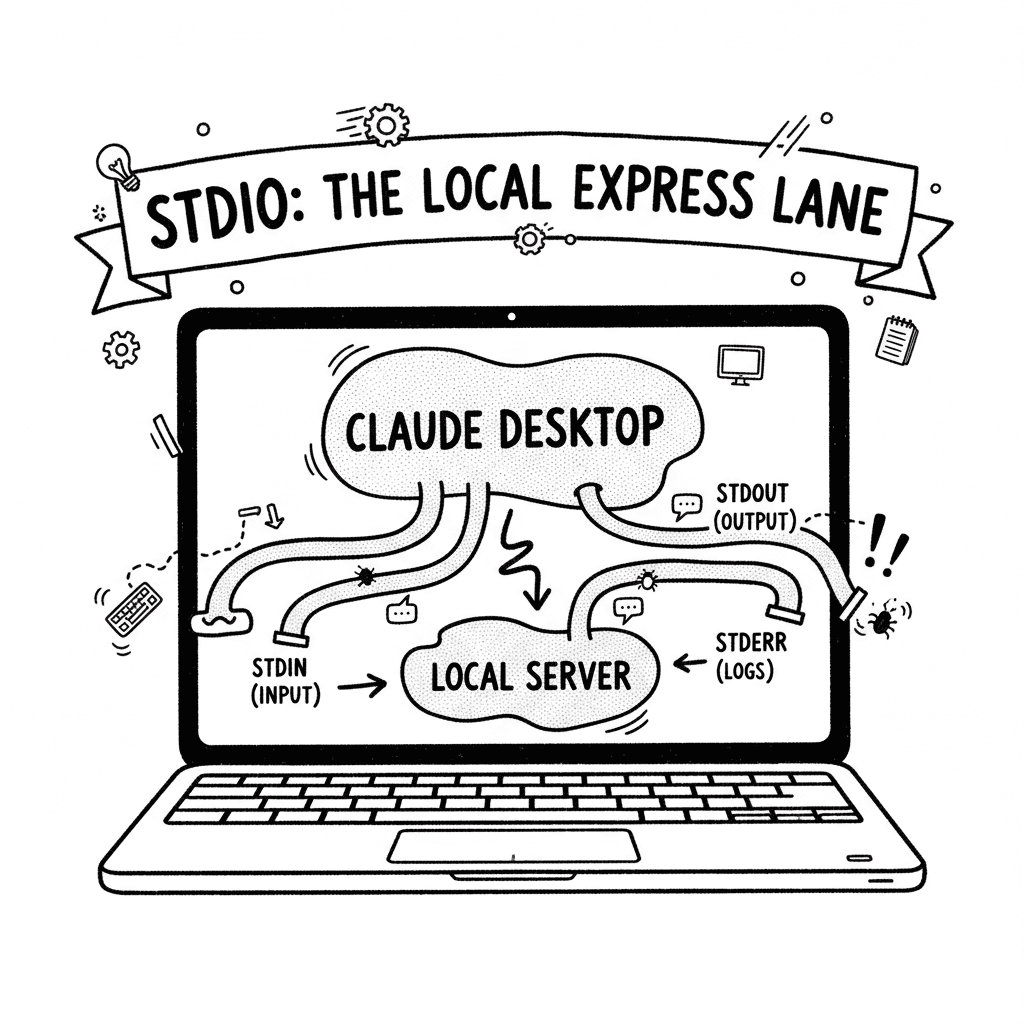
Stdio in Practice
Stdio is the "just run it" option. No config files, no ports, no deployment — the host spawns the server and they ta…
Learn how MCP clients discover tools, resources, and prompts, and stay in sync as servers change.
Learning Goals
- Understand the purpose and importance of the MCP discovery mechanism
- Identify the standardized endpoints for Tools, Resources, and Prompts
- Explain the client-initiated pattern for fetching capabilities
- Recognize how dynamic updates notify clients when capabilities change
Concept Card Preview
Visuals, diagrams, and micro-interactions you'll see in this module.
Why Discovery Exists
Before an AI can act, it must know what is available. Hardcoding tools or resources breaks as soon as a server changes —…
One Simple Pattern: /[primitive]/list
Discovery is intentionally predictable: one endpoint per primitive, always /list, always client-initiated. The tri…
Staying Fresh: Dynamic Discovery
Capabilities change at runtime — a tool is added, a resource is revoked, a prompt template is updated. Servers can send…
Master server primitives and build your first MCP server with FastMCP.
Learning Goals
- Master the three server primitives: Tools, Resources, and Prompts
- Understand who controls each primitive (Model/App/User)
- Learn the difference between Direct Resources and Resource Templates
- Build a functional MCP server using FastMCP and Python
- Test and debug your server using the MCP Inspector tool
Learning Goals
- Understand the three core client features servers can leverage: Elicitation, Roots, and Sampling
- Learn how servers request user information through Elicitation
- Understand Roots as filesystem boundary communication (advisory, not security)
- Master LLM sampling through clients with human-in-the-loop control